About George

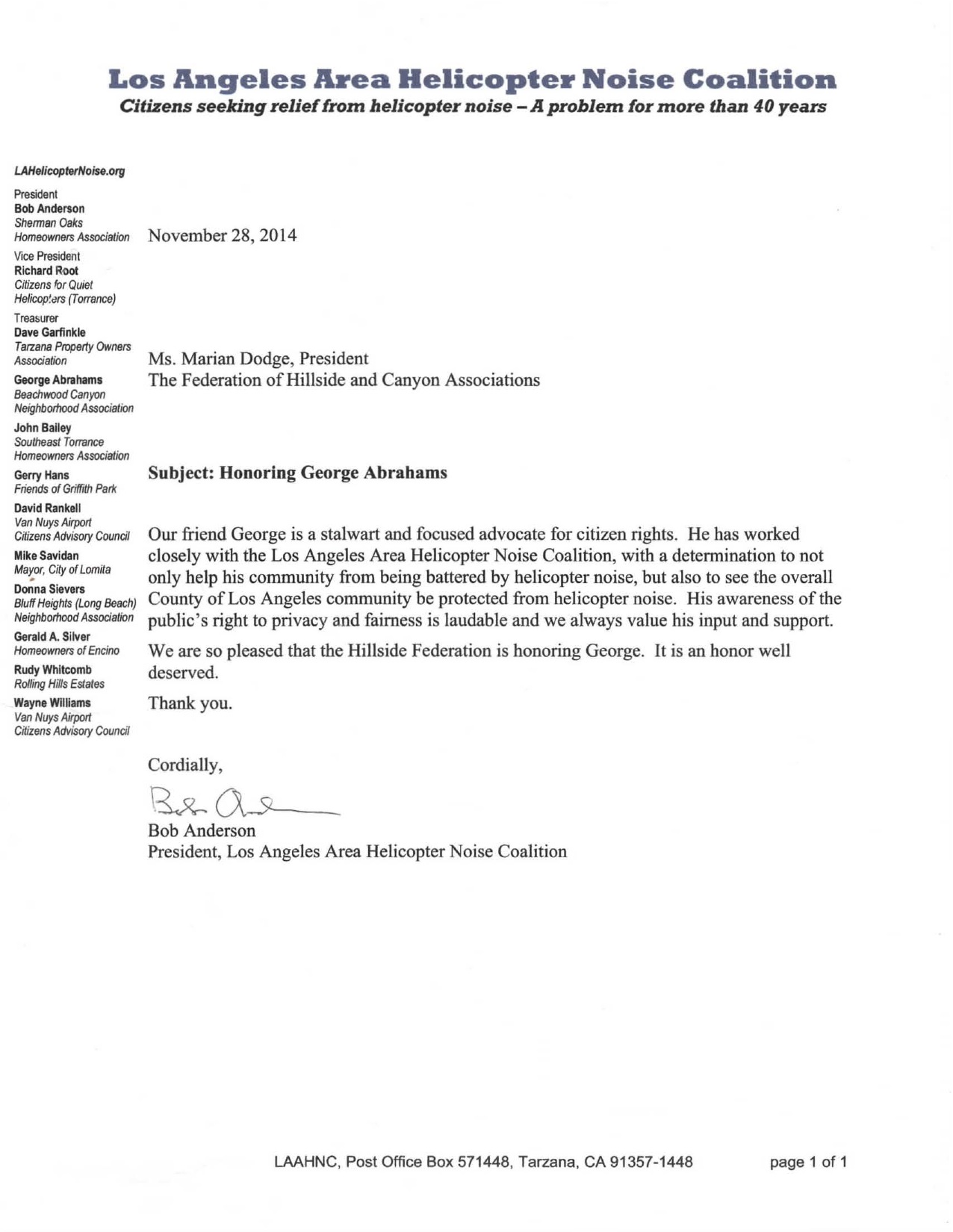
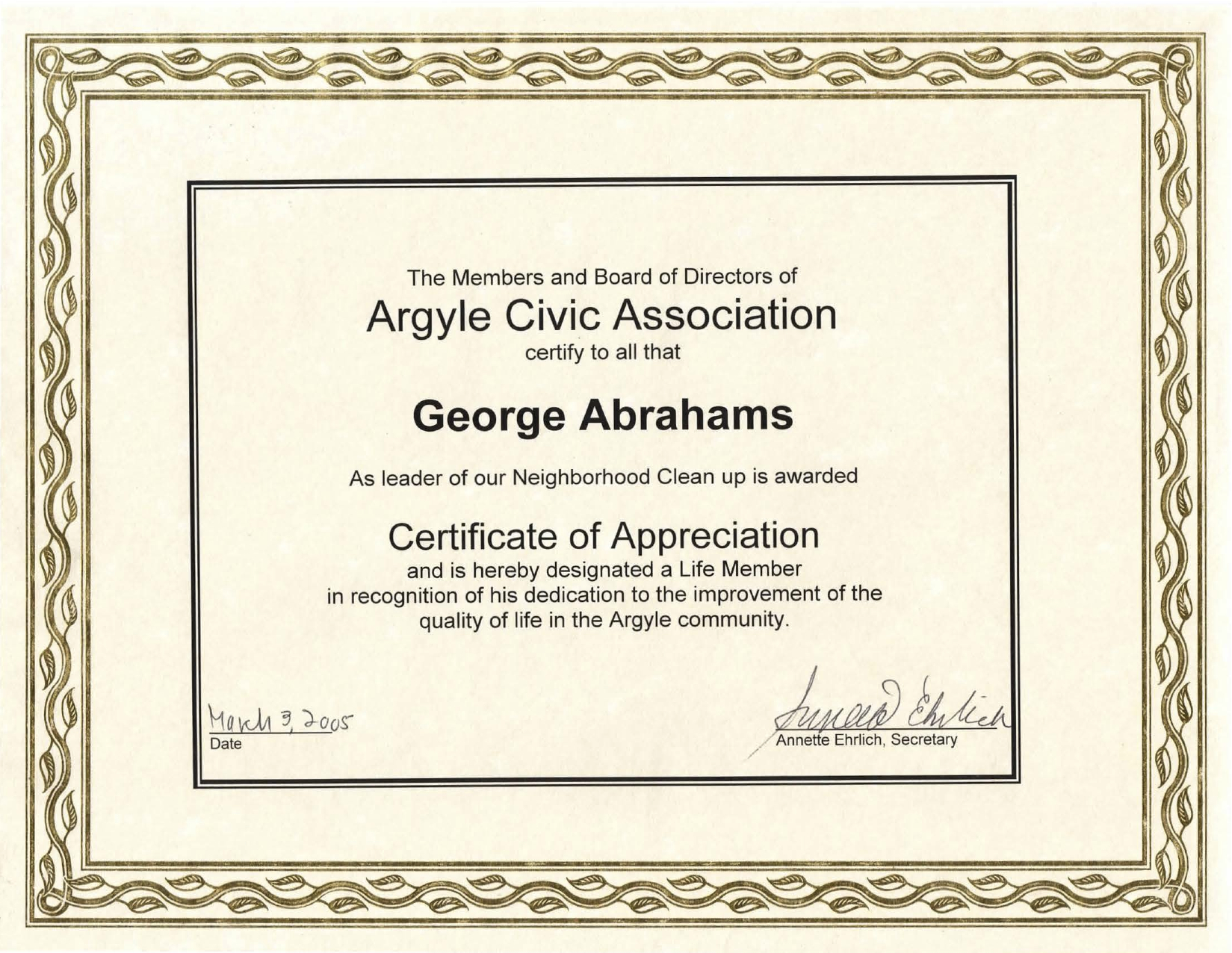
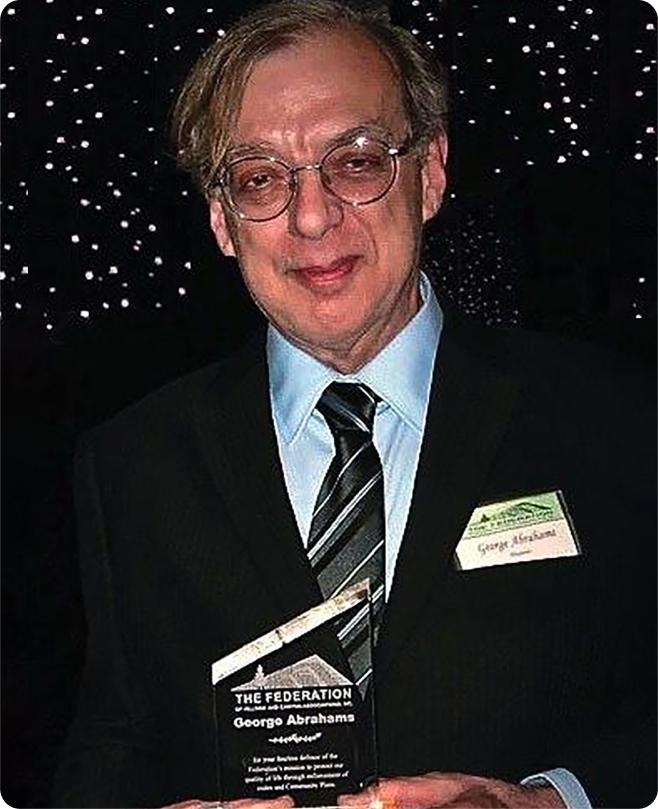
Hillside Federation Award 2014

George Abrahams was an extraordinary community leader and friend. 

Born in New York in 1951, George came to Hollywood in the late 1950s with his mother, prominent Hungarian actress Elissa Czobor Donig.

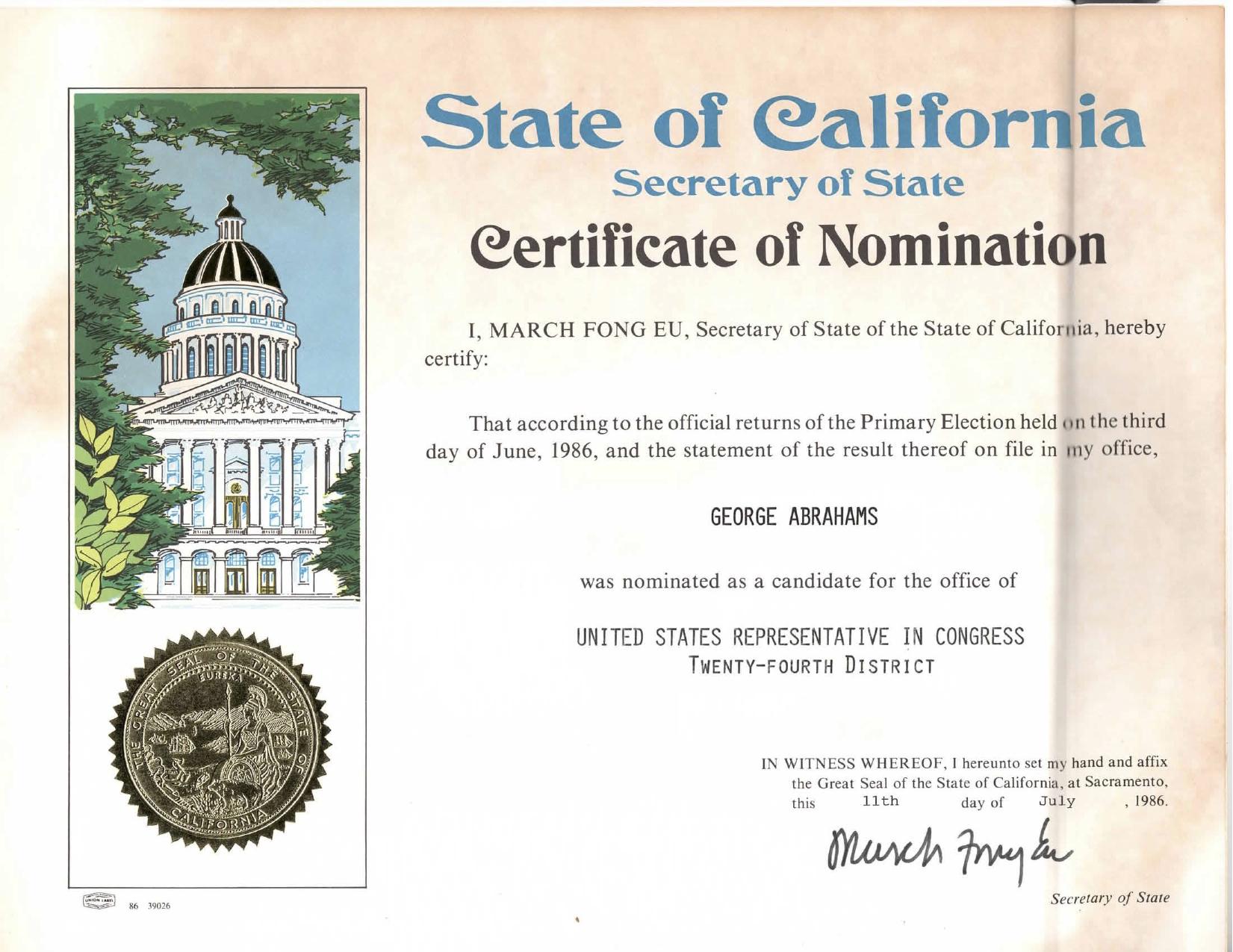
After graduating from Hollywood High, George studied physics and engineering at UC Berkeley and became known as an extremely skilled software engineer. Studying at UCLA in 1976, he was a registered participant in a variety of short courses at UCLA on numerical and asymptotic techniques for electromagnetics and antennas. His expertise was sought after by well-known data and science entities such as NASA, Microsoft, and IBM. In 1982 George ran for Los Angeles County Supervisor 3rd District on a platform of human rights and individual conscience. He was also officially recognized by the California Secretary of State as a candidate for the US Representative in the 24th Congressional District in 1986. He ran again for the same position in 1988.

George was brilliant, fearless, selfless, and caring. He sought to improve Los Angeles, particularly his beloved Hollywood, by defending the environment and insisting on accountability from City, County and State government.

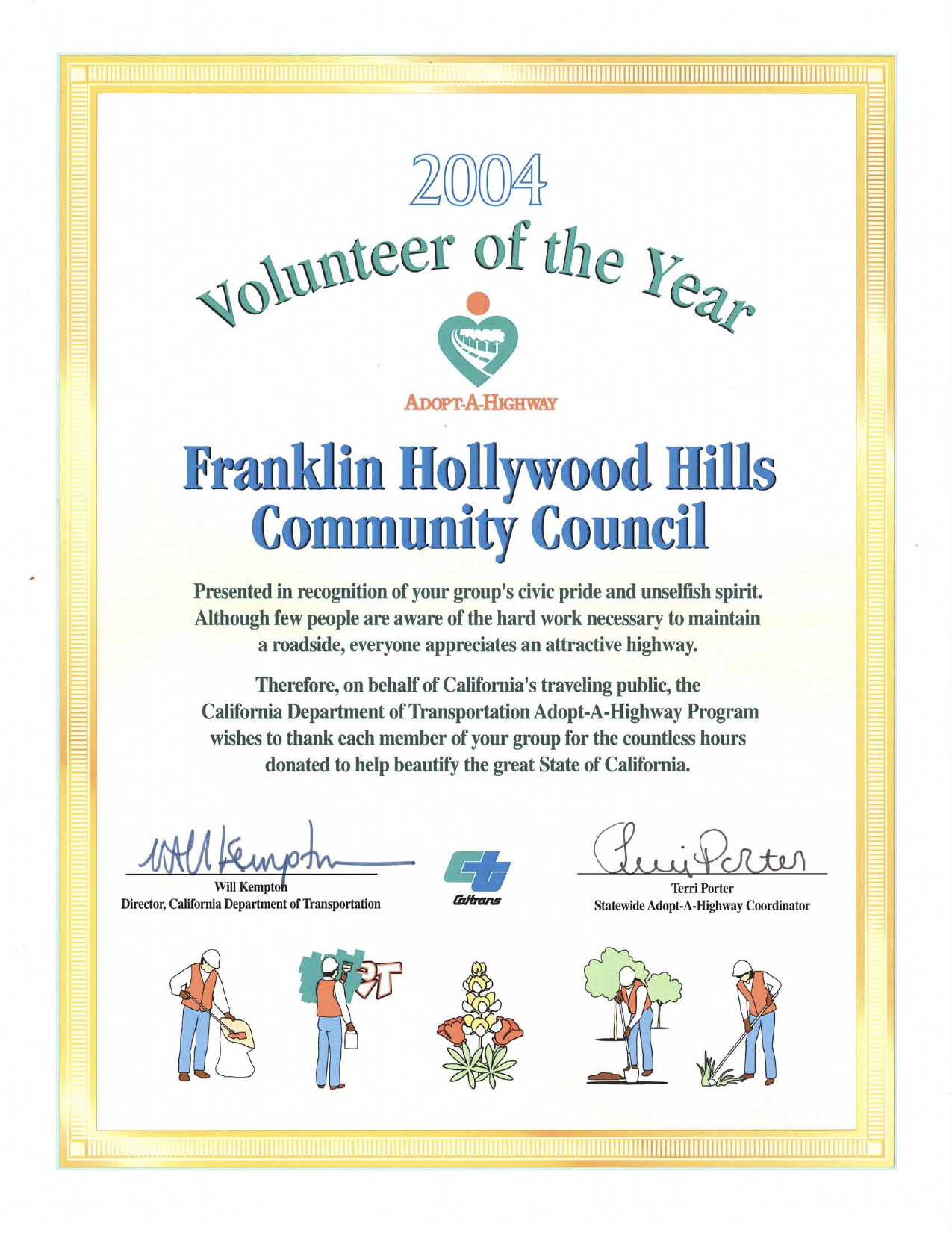
As George became more engaged in city and state matters, he found himself increasingly drawn to local planning and land use issues. Witnessing repeated abuses of power in the areas of planning, zoning, and housing, he could no longer remain on the sidelines. Over the years, George served in numerous leadership and advocacy roles, including as a member of the Franklin Hollywood Hills Community Council, a Stakeholder Member of the Planning and Land Use Management Committee of the Central Hollywood Neighborhood Council, and President of the Argyle Civic Association. He also sat on the board of the Los Angeles Area Helicopter Noise Coalition, co-founded the Beachwood Canyon Neighborhood Association, chaired the Legal Committee of SaveHollywood.org, and worked closely with residents and neighborhood groups to file appeals and lawsuits challenging the city’s violations of planning and zoning laws.

One of his proudest accomplishments was halting a massive Hollywood skyscraper project slated for construction on an active earthquake fault. George’s efforts not only stopped the dangerous development but also drew international attention to questionable practices at Los Angeles City Hall. In 2015, his campaign succeeded in getting the project officially thrown out, marking a major victory for public safety and government accountability. Here is a powerful news clip of George celebrating a landmark victory.

After the initial version of the dangerous Hollywood skyscraper project was thrown out, the developer, Millennium Partners, filed a second application in an attempt to revive the project. The organization George co-founded and led, StopTheMillenniumHollywood (STMH), continued the fight, carrying forward his work. Thanks to STMH’s relentless advocacy—including demands that the developer conduct proper trenching in key areas of the site, which Millennium had long tried to avoid—the second application was eventually withdrawn. A Public Records Act (PRA) request also uncovered damning documents the developer never intended for the public to see, further validating the community’s concerns.

In May of 2018, George was seriously injured after being hit by a Fed-Ex truck while crossing the street.  For nearly 3 years, George valiantly fought to get better but passed away on February 3, 2021.

Throughout his life, challenged powerful interests not with wealth or influence, but with persistence, integrity, and a deep sense of civic duty. Where others saw lost causes, George saw unfinished business. His fierce advocacy and tireless work protected not only his own neighborhood, but the safety and rights of residents across the city. Our community misses his sharp mind, steady guidance, and unwavering courage. His absence is acutely felt — but his legacy continues to guide and galvanize those committed to justice and accountability in public policy, the environment and all things in it.

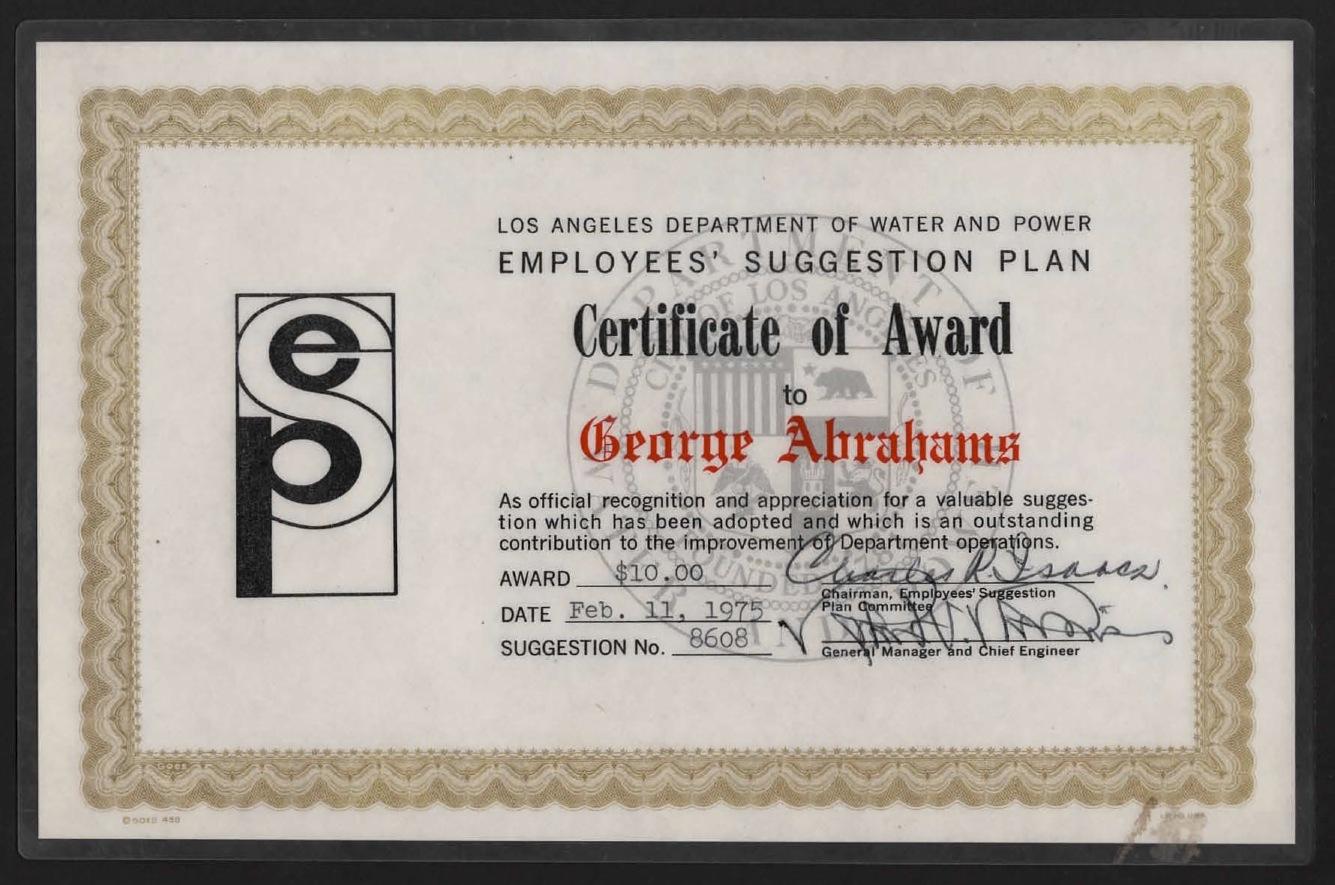
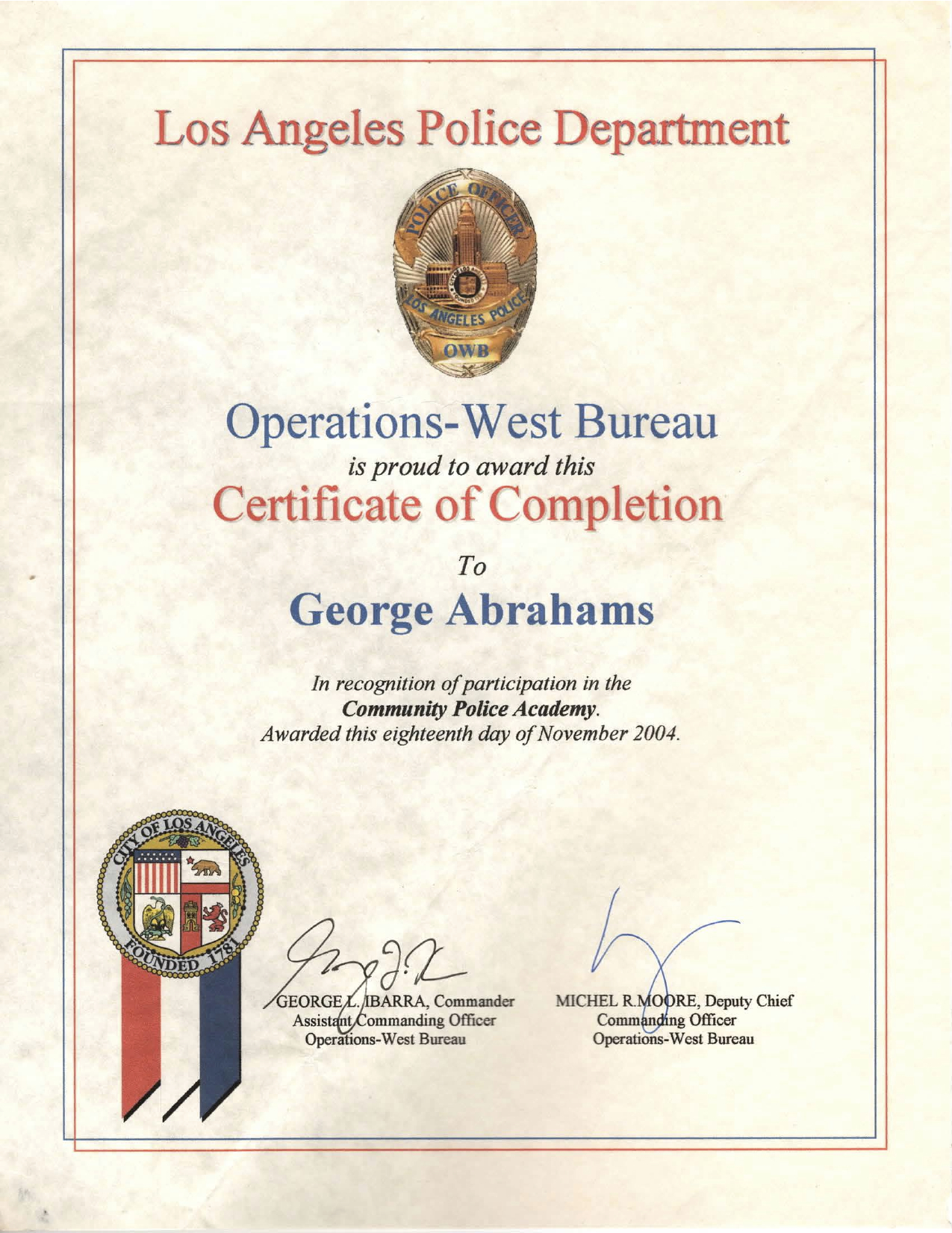
Check out just a few of the achievements and recognitions George was awarded below.

Some of George’s most notable cases:

StoptheMillenniumHollywood.com v City of Los Angeles, et al.

LASC case #: BS144606

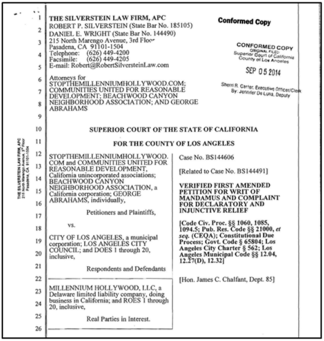
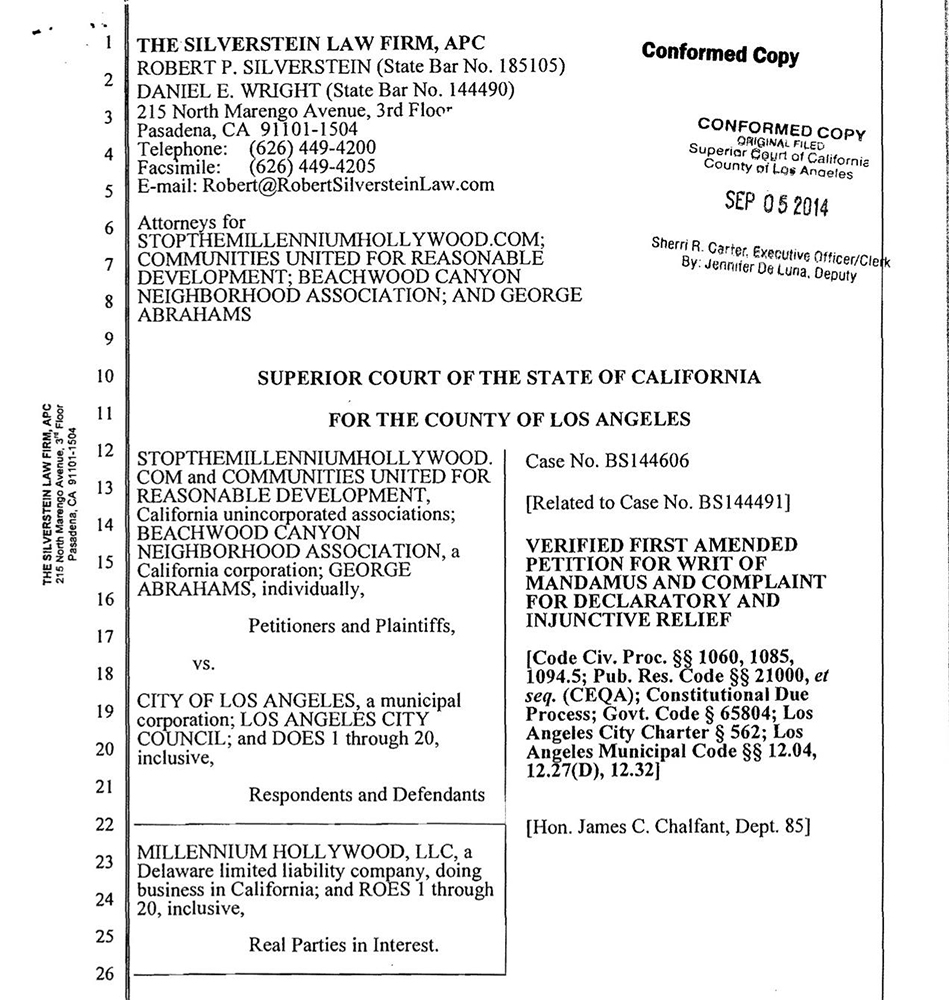
In 2012, George founded the local advocacy group Stop the Millennium Hollywood (STMH) in response to New York-based developers Millennium Partners and Millennium Hollywood, LLC filing an application to build skyscrapers near the historic Capitol Records building, just north of Hollywood Boulevard and Vine Street. The proposed project violated multiple laws, including the California Environmental Quality Act (CEQA). A trial court ultimately ruled that the Environmental Impact Report (EIR) failed to “present any concrete project proposal” and obstructed meaningful public participation. The City and developers appealed—but the Court of Appeal upheld the ruling and accordingly, denied their appeal. The decision became a published opinion and was later incorporated into the 2020 CEQA Guidelines (page xxxiii).

The Stopthemilleniumhollywood.com v. City of Los Angeles case established important legal standards under CEQA, establishing:

Click below to read the First Amended Petition

Check out the STMH website for a timeline of events and filings.

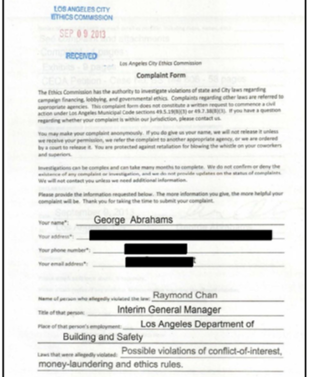
While the STMH case highlights a wide range of questionable conduct by the City, one particularly troubling issue involves former Los Angeles Department of Building and Safety (LADBS) General Manager Raymond Chan. At the same time Chan’s department was responsible for reviewing and approving seismic studies for the Millennium project, his son was receiving payments from Millennium Partners’ law firm—a clear conflict of interest.

George filed a complaint with the Ethics Commission over a decade ago, but the agency took no action. Ten years later, in 2023, following a federal jury trial, Raymond Chan was found guilty by a federal jury of racketeering and conspiracy for his role in a sweeping corruption scheme tied to real estate development in the City. Indicted by the FBI, Chan’s conviction resulted from a wide-ranging investigation that exposed systemic corruption at the highest levels of City Hall.

Click below to read the complaint George filed with the Ethics Commission. 

In 2018, Millennium took a second bite at the apple attempting to build skyscrapers directly atop an active earthquake fault in the heart of Hollywood. Operating under a new name—MCAF Vine, LLC—they rebranded the controversial proposal as the “Hollywood Center Project”.

Despite serious public concerns, the Department of City Planning released the Draft Environmental Impact Report (EIR) during the height of the COVID-19 pandemic in 2020. The agency denied multiple public requests to extend the comment period or hold additional hearings. Prior to any formal proceedings, STMH’s attorney, Robert Silverstein, submitted a detailed objection letter outlining a wide range of legal and procedural violations already committed.

The full extent of Millennium’s second effort to ignore seismic hazards, bypass environmental safeguards, and endanger thousands of lives is documented on the STMH website.

The short version is this: Millennium deliberately avoided conducting trenching studies in the precise locations where the California Geological Survey had previously identified active fault lines. STMH, along with concerned community members pushed Councilmember Mitch O’Farrell, applying pressure—again and again—until Millennium finally agreed (or was forced) to trench in those critical areas. Still, they never tested every required location.

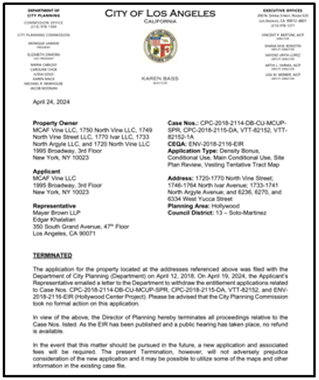
After the trenching in the specific locations they avoided for so many years – silence. We heard nothing from them until 2024, when Millennium’s representative quietly submitted a letter to the Department of City Planning withdrawing their application.

And for those unfamiliar with Millennium Partners’ track record: consider their sinking towers in San Francisco—a disaster costing millions of dollars and endangering thousands of residents. When STMH dug deeper, it was no surprise to find that serious oversights and questionable decisions were once again at play.

It wasn’t city departments or your elected officials who stood up—driven by concern for public safety—to stop a project that would have endangered thousands of lives. It was George.

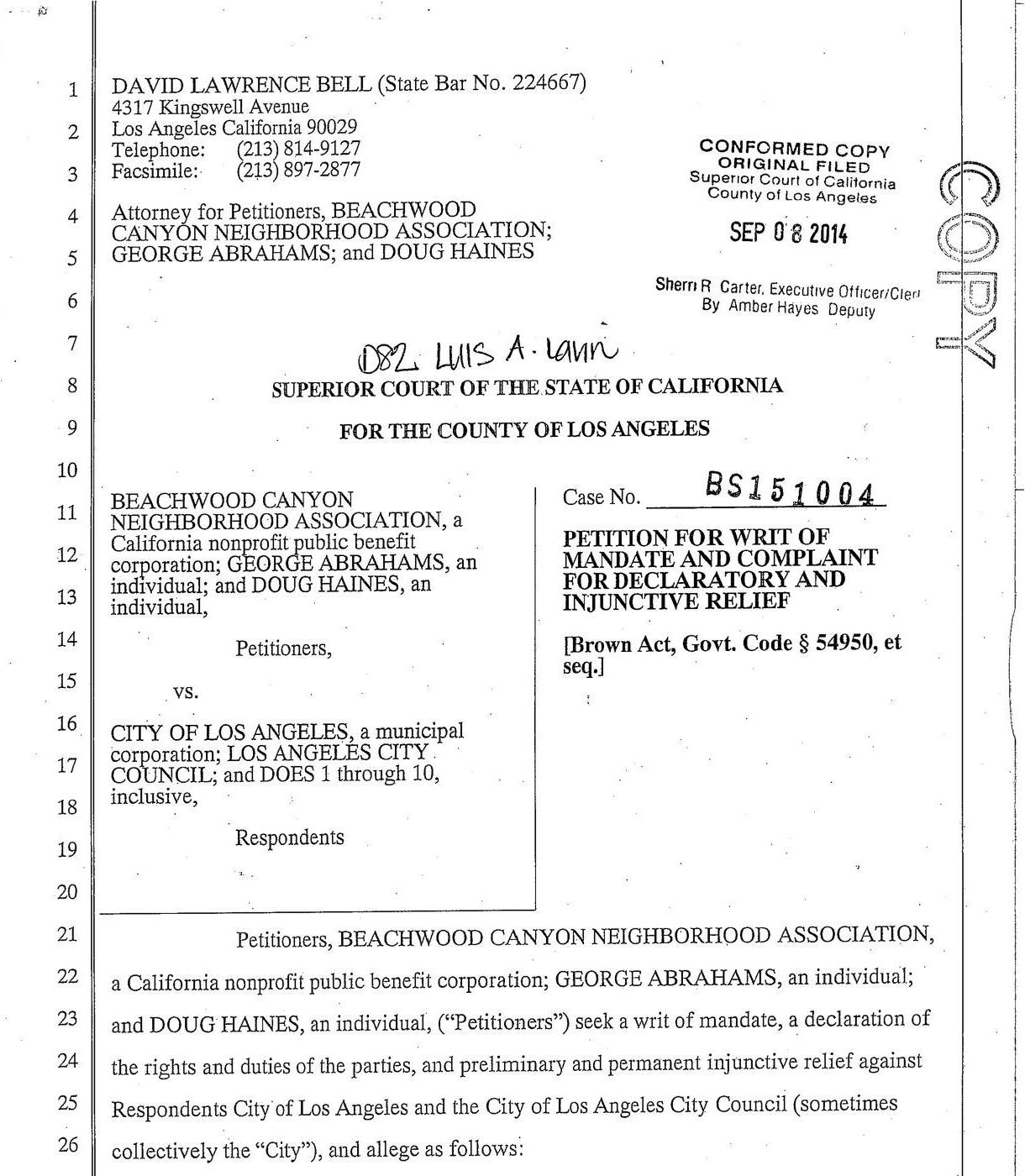
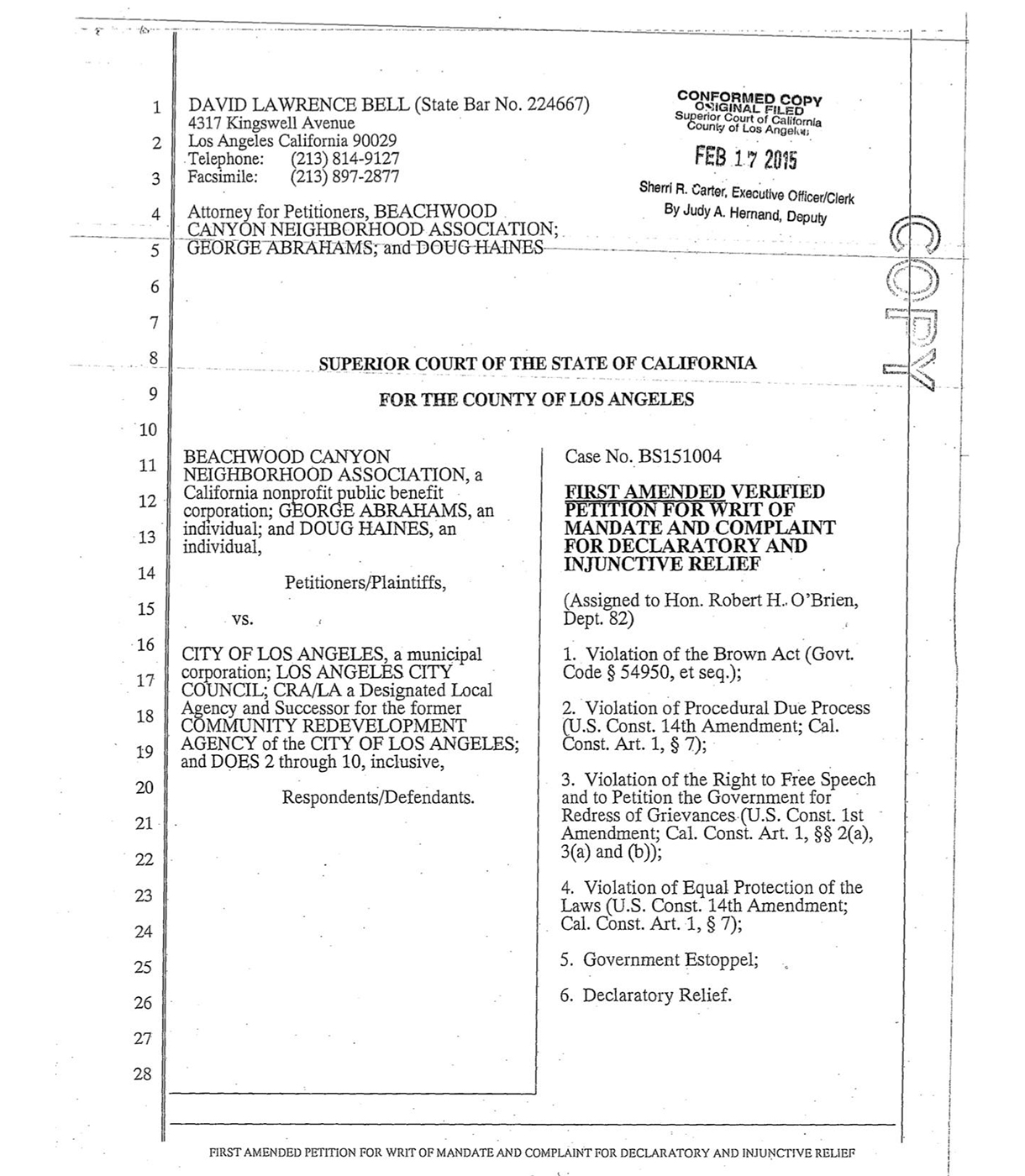
LASC case # BS151004

COA case # B288964

This case involves Brown Act violations where then CD13 Councilmember Mitch O’Farrell denied George and another local resident access to a Hollywood Design Review Committee (HDRC) public meeting.  Efforts to resolve the matter without court intervention included a Cure and Correct letter from attorney Robert Silverstein, which requested that the city reschedule and rehear the meeting, and guarantee the public unfettered access. The City responded by asserting that the Brown Act did not apply to this meeting, signaling their intention to continue violating the law.  During the ongoing litigation, Councilmember O’Farrell openly declared he would “not allow certain members of the public to attend HDRC meetings who expressed disagreement with government positions regarding major developments and [those who] have resorted to litigation on certain matters in their community” (FAP, 2015, p. 18). Consequently, the petition was amended to include additional violations. 

Click below to read the original Petition which includes correspondence with the City

Click below to read the Amended Petition

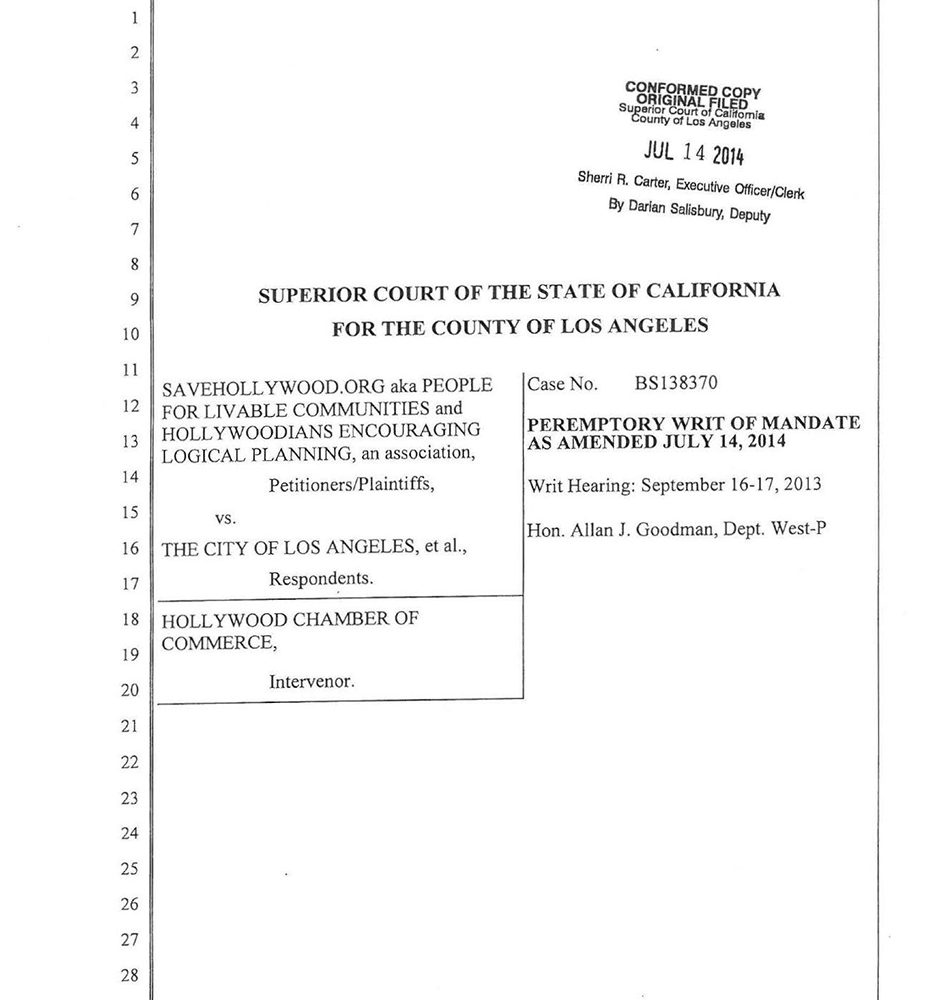
LASC case # BS138370

A community group co-founded by George, SaveHollywood.Org, brought a landmark lawsuit against the City of Los Angeles challenging the adoption of the Hollywood Community Plan Update and its Environmental Impact Report (EIR). The case demonstrated that the City relied on inflated population projections, outdated data, and an inaccurate environmental analysis in violation of the CEQA. The group argued that the plan’s zoning changes would pave the way for overdevelopment without properly disclosing the environmental consequences or providing the public with an honest assessment of the impacts.

The Court ruled in favor of SaveHollywood.Org, finding that the City’s plan and EIR were “fundamentally flawed”. The court ordered the City to rescind the plan and all associated approvals, stating that the EIR failed to provide a stable and finite description of the project and misrepresented key data used to justify the plan.

This decision was a critical victory not only for Hollywood residents but for communities across California, affirming that cities must base long-term planning decisions on accurate facts, legal consistency, and public accountability. It also reinforced CEQA’s core purpose: to ensure transparency, informed decision-making, and public participation in development that affects the future of neighborhoods.

Click below to review the Judge’s Statement of Decision

Click below to review the Amended Writ

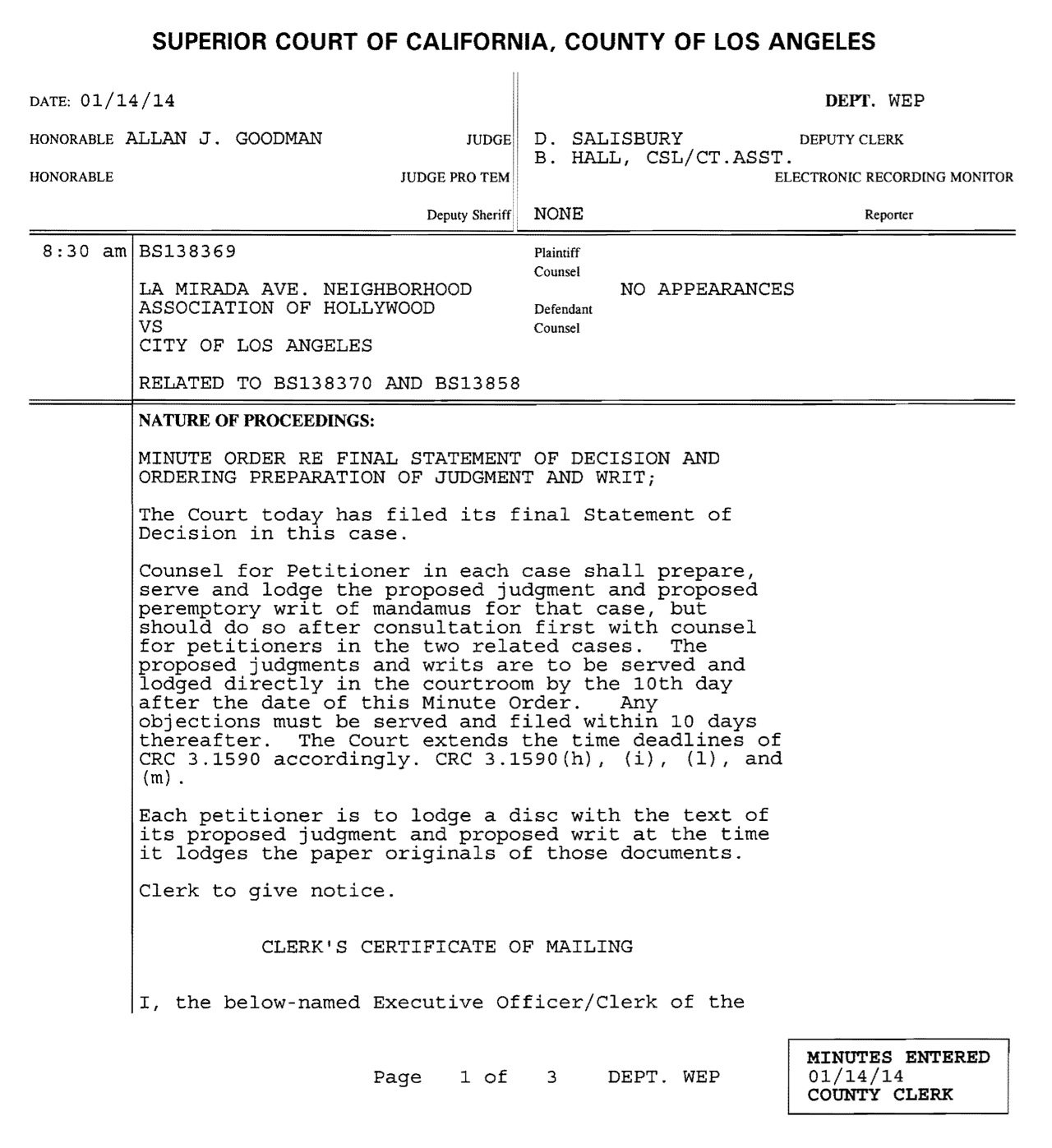
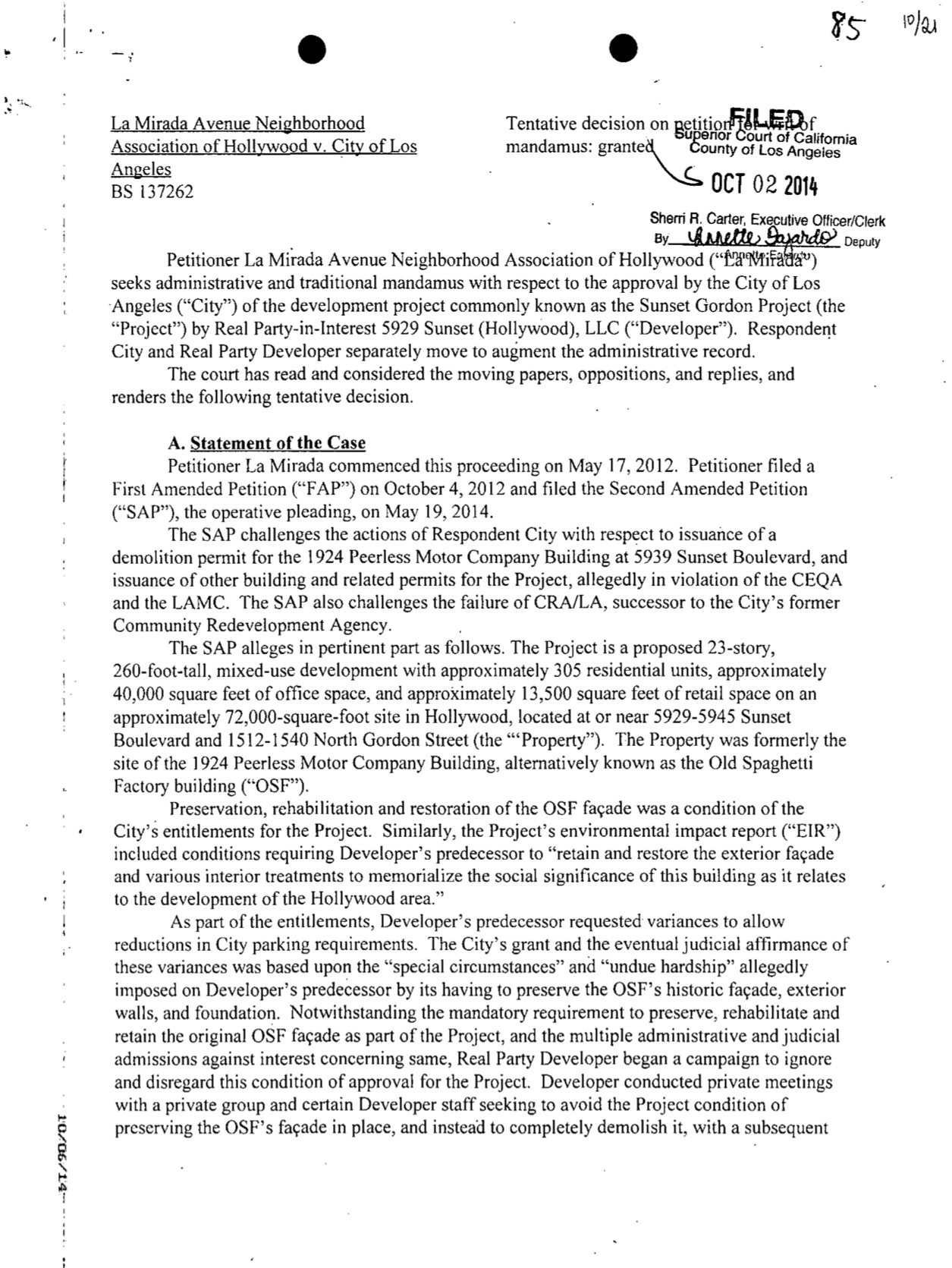
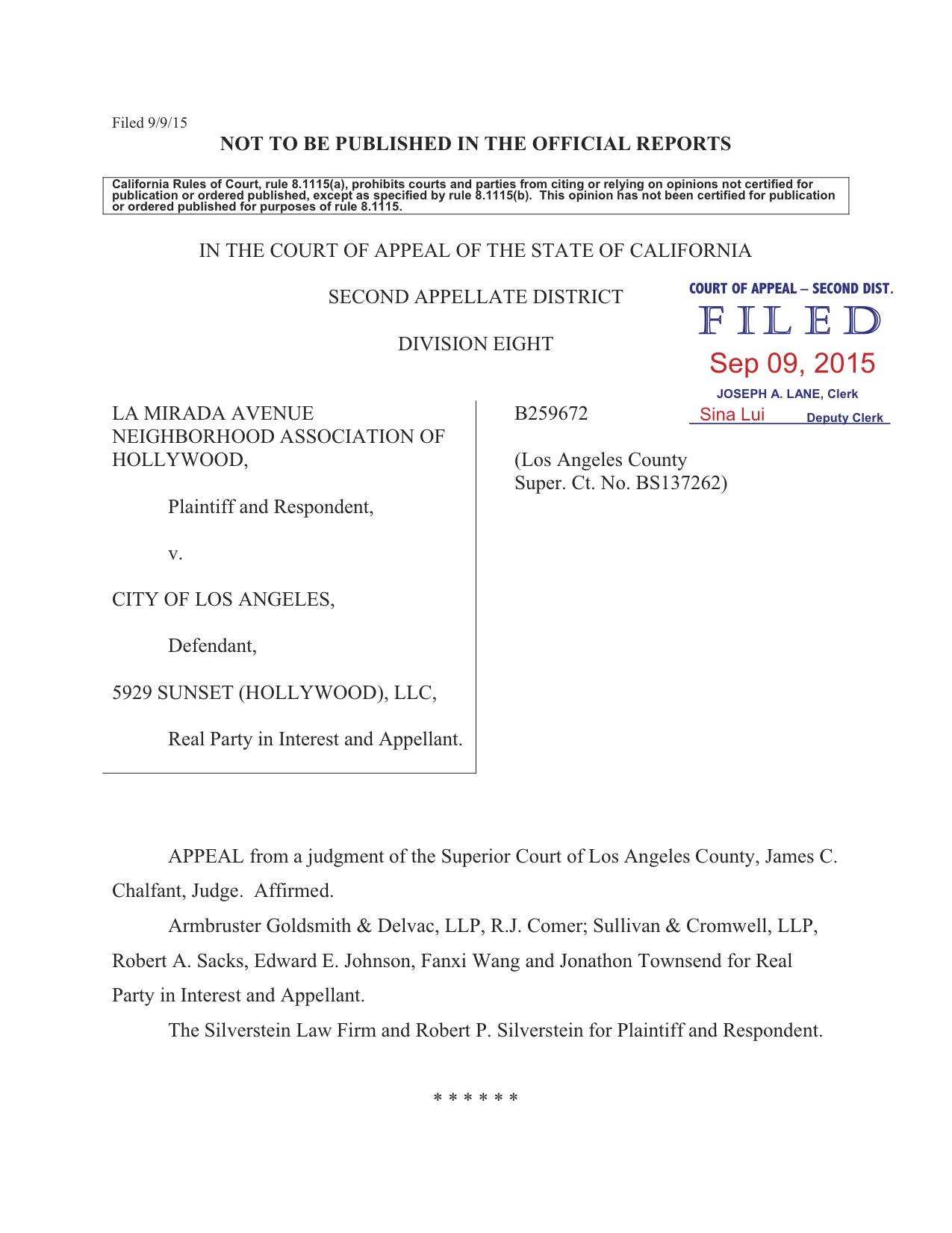
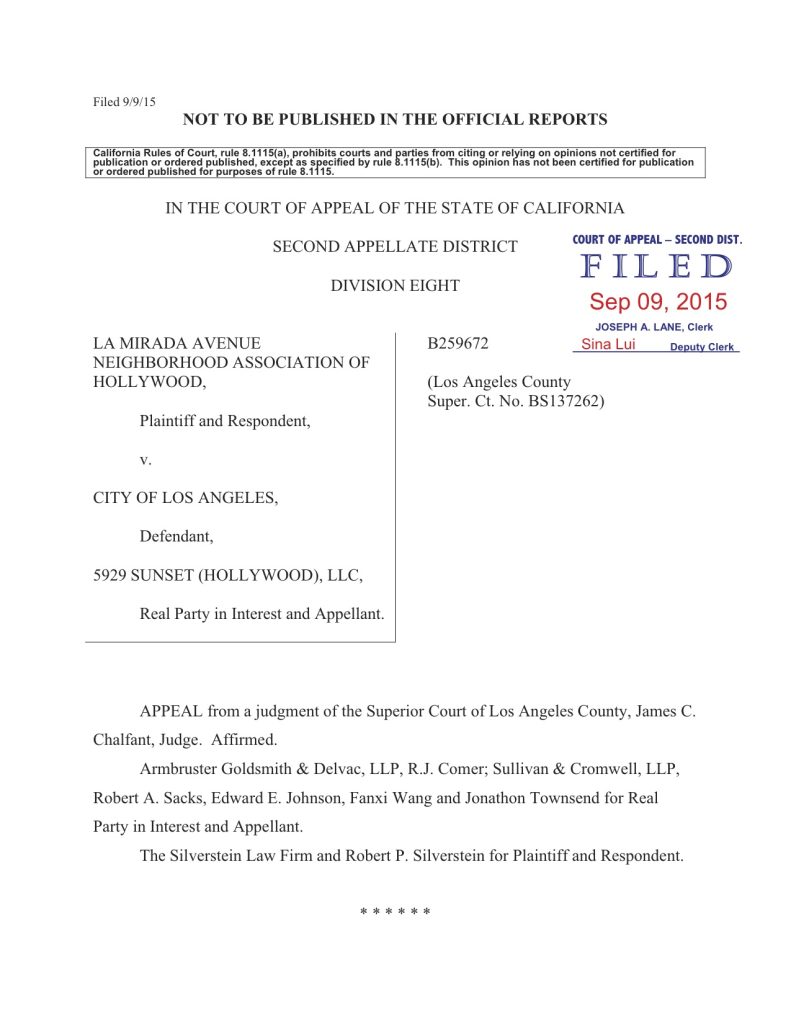
LASC case # BS137262

COA case # B259672

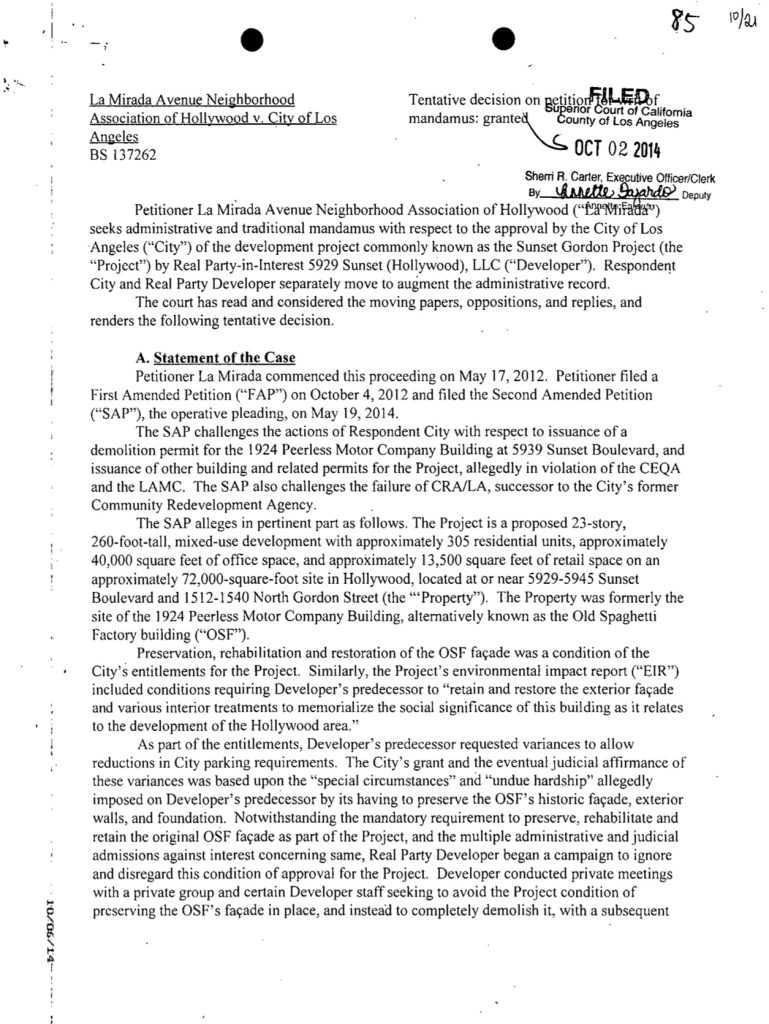
 George supported neighbors from the La Mirada Neighborhood Association who were adversely impacted by the unlawful approval of the Sunset and Gordon project, located on the historic site of the 1924 Peerless Motor Company Building. Over the decades, the building evolved into a West Coast radio station (KNX), was later purchased by theatrical pioneer Max Reinhardt for use as a Studio Workshop, and from 1976 onward, became home to the Old Spaghetti Factory.

In 2011, developers CIM Group purchased the historic building with plans to demolish it and construct a 23-story, 260-foot-tall mixed-use tower. As a condition of City approval, CIM was required to preserve the historically significant façade of the Old Spaghetti Factory. In exchange for nine land use variances—including reduced parking requirements and spot-zoning—the developers also agreed to “retain and restore various interior treatments to memorialize the social significance of this building as it relates to the development of the Hollywood area” (Decision, p. 1). Additionally, CIM received $9.6 million in taxpayer subsidies based on their commitment to preserve the façade. That promise was broken—and the public funds were never returned.

  Despite their commitments, the developers applied for and obtained a full demolition permit—and on February 21, 2012, the building, including its historic façade, was completely demolished. The La Mirada Neighborhood Association attempted to challenge the permit by requesting a review from the Los Angeles Department of Building and Safety (LADBS), but the agency refused to provide the required fee information, effectively blocking the process. Five months later, LADBS dismissed the matter, claiming no violations had occurred. However, the court found that both the Zoning Administrator (ZA) and the Area Planning Commission (APC) had acted illogically and inconsistently in their determinations, failing to perform their ministerial duty to revoke all permits issued under LAMC 11.02. Ultimately, La Mirada prevailed in trial court. The City and developers appealed—and lost. More details on the case can be found here.

Click below to review the Judge’s Statement of Decision

Click below to review the COA Opinion

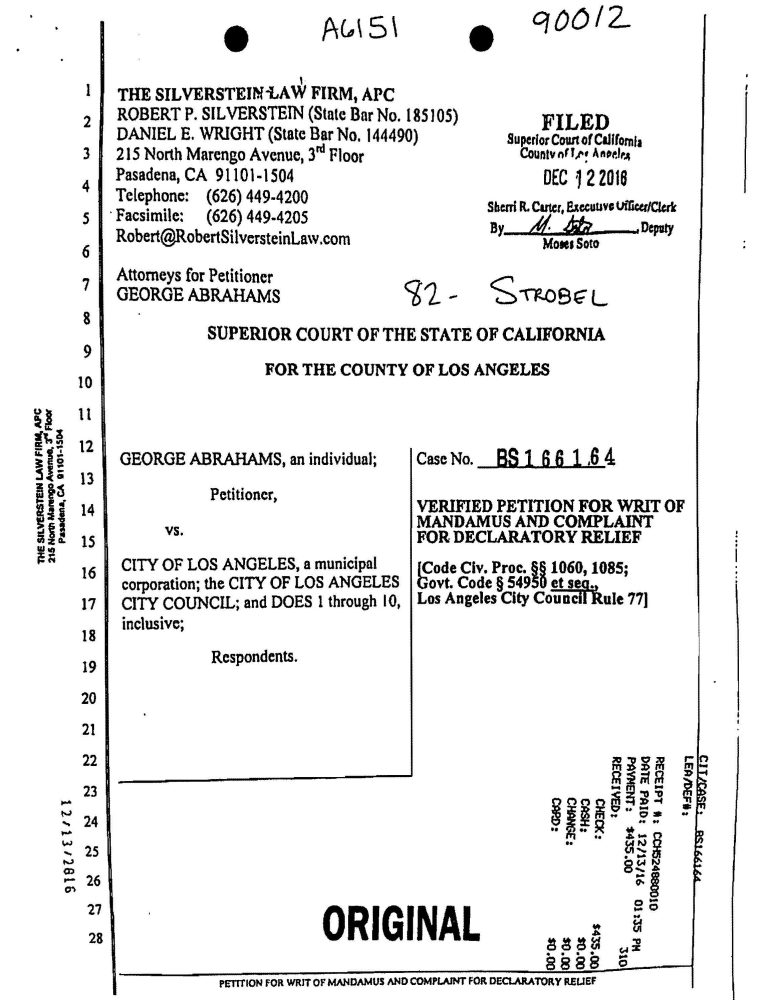
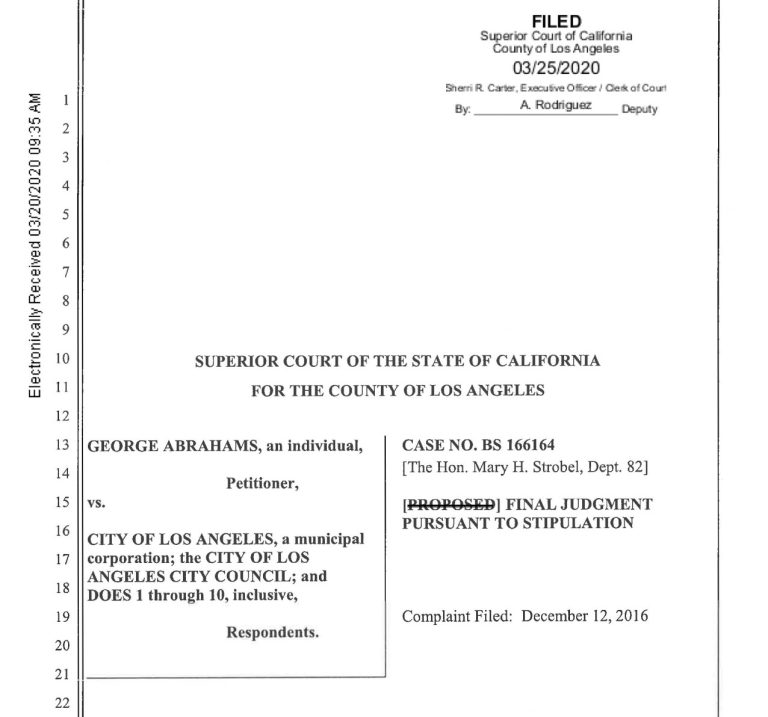
LASC case # BS166164

 In this Brown Act case, the City Council unlawfully amended its own rules to target individuals who wished to speak on multiple agenda items during public meetings. Under the law, any such changes to public participation procedures must follow a transparent process that includes public input and consultation with neighborhood councils. Instead, the City adopted these amendments behind closed doors—without any public participation at all.

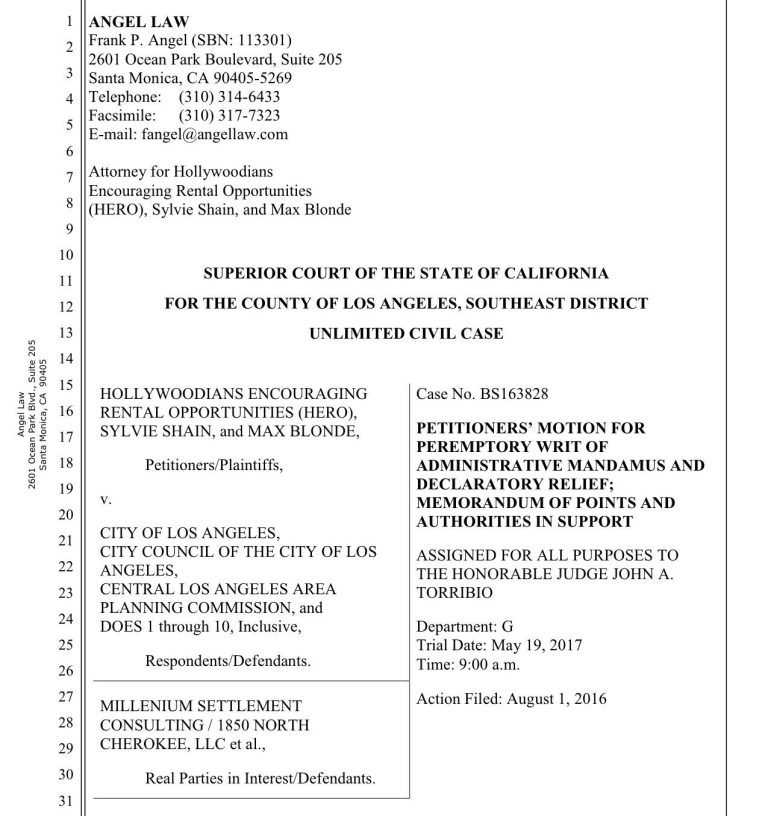
LASC case # BS163828

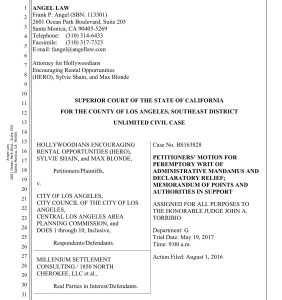
Alongside two other residents, HERO filed suit against the City after then–Councilmember Mitch O’Farrell (CD13) approved the conversion of 18 rent-stabilized apartments into a 24-room hotel—without public participation and in violation of the California Environmental Quality Act (CEQA). The City failed to assess the cumulative environmental impacts of the project, including the displacement of tenants and permanent loss of affordable housing.

Evicting tenants from rent-stabilized units to make way for luxury hotels or unaffordable developments has become standard practice at City Hall. These decisions have led to a sharp rise in evictions of long-term, low-income residents, eroding the fabric of neighborhoods across Los Angeles.

As stated in the press Release:

  “Under CEQA, local governments must evaluate and mitigate a project’s potentially significant impacts on the environment, accounting for ‘the whole action involved,’ including offsite and cumulative effects associated with the displacement of people when the project results in loss of housing. CEQA requires an Environmental Impact Report (EIR) when housing loss and displacement of tenants or other environmental effects of a project ‘will cause substantial adverse effects on human beings, either directly or indirectly.”

Click below to read the Petition for Writ

LASC case #: BS144606

In 2012, George founded the local advocacy group Stop the Millennium Hollywood (STMH) in response to New York-based developers Millennium Partners and Millennium Hollywood, LLC filing an application to build skyscrapers near the historic Capitol Records building, just north of Hollywood Boulevard and Vine Street.  The proposed project violated multiple laws, including the California Environmental Quality Act (CEQA). A trial court ultimately ruled that the Environmental Impact Report (EIR) failed to “present any concrete project proposal” and obstructed meaningful public participation. The City and developers appealed—but the Court of Appeal upheld the ruling and accordingly, denied their appeal. The decision became a published opinion and was later incorporated into the 2020 CEQA Guidelines (page xxxiii).

The Stopthemilleniumhollywood.com v. City of Los Angeles case established important legal standards under CEQA, establishing:

Click below to read the First Amended Petition

Check out the STMH website for a timeline of events and filings.

While the STMH case highlights a wide range of questionable conduct by the City, one particularly troubling issue involves former Los Angeles Department of Building and Safety (LADBS) General Manager Raymond Chan. At the same time Chan’s department was responsible for reviewing and approving seismic studies for the Millennium project, his son was receiving payments from Millennium Partners’ law firm—a clear conflict of interest.

George filed a complaint with the Ethics Commission over a decade ago, but the agency took no action. Ten years later, in 2023, following a federal jury trial, Raymond Chan was found guilty by a federal jury of racketeering and conspiracy for his role in a sweeping corruption scheme tied to real estate development in the City. Indicted by the FBI, Chan’s conviction resulted from a wide-ranging investigation that exposed systemic corruption at the highest levels of City Hall.

Click below to read the complaint George filed with the Ethics Commission. 

In 2018, Millennium took a second bite at the apple attempting to build skyscrapers directly atop an active earthquake fault in the heart of Hollywood. Operating under a new name—MCAF Vine, LLC—they rebranded the controversial proposal as the “Hollywood Center Project”.

Despite serious public concerns, the Department of City Planning released the Draft Environmental Impact Report (EIR) during the height of the COVID-19 pandemic in 2020. The agency denied multiple public requests to extend the comment period or hold additional hearings. Prior to any formal proceedings, STMH’s attorney, Robert Silverstein, submitted a detailed objection letter outlining a wide range of legal and procedural violations already committed.

The full extent of Millennium’s second effort to ignore seismic hazards, bypass environmental safeguards, and endanger thousands of lives is documented on the STMH website.

The short version is this: Millennium deliberately avoided conducting trenching studies in the precise locations where the California Geological Survey had previously identified active fault lines. STMH, along with concerned community members pushed Councilmember Mitch O’Farrell, applying pressure—again and again—until Millennium finally agreed (or was forced) to trench in those critical areas. Still, they never tested every required location.

After the trenching in the specific locations they avoided for so many years – silence. We heard nothing from them until 2024, when Millennium’s representative quietly submitted a letter to the Department of City Planning withdrawing their application.

And for those unfamiliar with Millennium Partners’ track record: consider their sinking towers in San Francisco—a disaster costing millions of dollars and endangering thousands of residents. When STMH dug deeper, it was no surprise to find that serious oversights and questionable decisions were once again at play.

It wasn’t city departments or your elected officials who stood up—driven by concern for public safety—to stop a project that would have endangered thousands of lives. It was George.

LASC case #: BS151004

COA case #: B288964

This case involves Brown Act violations where then CD13 Councilmember Mitch O’Farrell denied George and another local resident access to a Hollywood Design Review Committee (HDRC) public meeting.  Efforts to resolve the matter without court intervention included a Cure and Correct letter from attorney Robert Silverstein, which requested that the city reschedule and rehear the meeting, and guarantee the public unfettered access. The City responded by asserting that the Brown Act did not apply to this meeting, signaling their intention to continue violating the law.  During the ongoing litigation, Councilmember O’Farrell openly declared he would “not allow certain members of the public to attend HDRC meetings who expressed disagreement with government positions regarding major developments and [those who] have resorted to litigation on certain matters in their community” (FAP, 2015, p. 18). Consequently, the petition was amended to include additional violations. 

Click below to read the original Petition which includes the correspondence with the City.

Click below to read the Amended  Petition

Click below to read the original Petition which includes the correspondence with the City.

Click below to read the Amended  Petition

LASC case #: BS138370

A community group co-founded by George, SaveHollywood.Org, brought a landmark lawsuit against the City of Los Angeles challenging the adoption of the Hollywood Community Plan Update and its Environmental Impact Report (EIR). The case demonstrated that the City relied on inflated population projections, outdated data, and an inaccurate environmental analysis in violation of the CEQA. The group argued that the plan’s zoning changes would pave the way for overdevelopment without properly disclosing the environmental consequences or providing the public with an honest assessment of the impacts.

The Court ruled in favor of SaveHollywood.Org, finding that the City’s plan and EIR were “fundamentally flawed”. The court ordered the City to rescind the plan and all associated approvals, stating that the EIR failed to provide a stable and finite description of the project and misrepresented key data used to justify the plan.

This decision was a critical victory not only for Hollywood residents but for communities across California, affirming that cities must base long-term planning decisions on accurate facts, legal consistency, and public accountability. It also reinforced CEQA’s core purpose: to ensure transparency, informed decision-making, and public participation in development that affects the future of neighborhoods.

Click below to review the Judge’s Statement of Decision

Check out the STMH website for a complete timeline of events and filings. Petition

Click below to review the Judge’s Statement of Decision

Check out the STMH website for a complete timeline of events and filings. Petition

LASC case #: BS137262

COA case #: B259672

 George supported neighbors from the La Mirada Neighborhood Association who were adversely impacted by the unlawful approval of the Sunset and Gordon project, located on the historic site of the 1924 Peerless Motor Company Building. Over the decades, the building evolved into a West Coast radio station (KNX), was later purchased by theatrical pioneer Max Reinhardt for use as a Studio Workshop, and from 1976 onward, became home to the Old Spaghetti Factory.

In 2011, developers CIM Group purchased the historic building with plans to demolish it and construct a 23-story, 260-foot-tall mixed-use tower. As a condition of City approval, CIM was required to preserve the historically significant façade of the Old Spaghetti Factory. In exchange for nine land use variances—including reduced parking requirements and spot-zoning—the developers also agreed to “retain and restore various interior treatments to memorialize the social significance of this building as it relates to the development of the Hollywood area” (Decision, p. 1). Additionally, CIM received $9.6 million in taxpayer subsidies based on their commitment to preserve the façade. That promise was broken—and the public funds were never returned.

  Despite their commitments, the developers applied for and obtained a full demolition permit—and on February 21, 2012, the building, including its historic façade, was completely demolished. The La Mirada Neighborhood Association attempted to challenge the permit by requesting a review from the Los Angeles Department of Building and Safety (LADBS), but the agency refused to provide the required fee information, effectively blocking the process. Five months later, LADBS dismissed the matter, claiming no violations had occurred. However, the court found that both the Zoning Administrator (ZA) and the Area Planning Commission (APC) had acted illogically and inconsistently in their determinations, failing to perform their ministerial duty to revoke all permits issued under LAMC 11.02. Ultimately, La Mirada prevailed in trial court. The City and developers appealed—and lost. More details on the case can be found here.

Click below to review the Judge’s Statement of Decision

Click below to review the COA Opinion

LASC case #: BS166164

 In this Brown Act case, the City Council unlawfully amended its own rules to target individuals who wished to speak on multiple agenda items during public meetings. Under the law, any such changes to public participation procedures must follow a transparent process that includes public input and consultation with neighborhood councils. Instead, the City adopted these amendments behind closed doors—without any public participation at all.

Click below to review the Judge’s Statement of Decision

Check out the STMH website for a complete timeline of events and filings. Petition

LASC case #: BS163828

Alongside two other residents, HERO filed suit against the City after then–Councilmember Mitch O’Farrell (CD13) approved the conversion of 18 rent-stabilized apartments into a 24-room hotel—without public participation and in violation of the California Environmental Quality Act (CEQA). The City failed to assess the cumulative environmental impacts of the project, including the displacement of tenants and permanent loss of affordable housing.

Evicting tenants from rent-stabilized units to make way for luxury hotels or unaffordable developments has become standard practice at City Hall. These decisions have led to a sharp rise in evictions of long-term, low-income residents, eroding the fabric of neighborhoods across Los Angeles.

As stated in the press Release:

  “Under CEQA, local governments must evaluate and mitigate a project’s potentially significant impacts on the environment, accounting for ‘the whole action involved,’ including offsite and cumulative effects associated with the displacement of people when the project results in loss of housing. CEQA requires an Environmental Impact Report (EIR) when housing loss and displacement of tenants or other environmental effects of a project ‘will cause substantial adverse effects on human beings, either directly or indirectly.’”

Click below to read the Petition for Writ